
rainy season baby gear Seattle Portland Parents’ Ultimate Guide
Table of Contents
When “April showers” stretch from October to June in Seattle and Portland, baby gear takes a beating. If you have spent time walking the wet sidewalks along the I-5 corridor, you already know the drill. The Pacific Northwest delivers over 150 rainy days a year. That constant dampness creates real challenges for baby sleep, sensitive skin, and indoor air quality. You need a reliable system for comfort, safety, and daily convenience. This guide covers the best rainy season baby gear Seattle Portland families actually use. We focus on weather-tested products that survive drizzle, humidity, and tight living spaces.
Note: This post contains Amazon affiliate links. We may earn a small commission at no extra cost to you if you purchase through our recommendations. We only suggest gear we’ve researched and that PNW parents consistently rely on.
Stroller & Carrier Upgrades for Wet Commutes
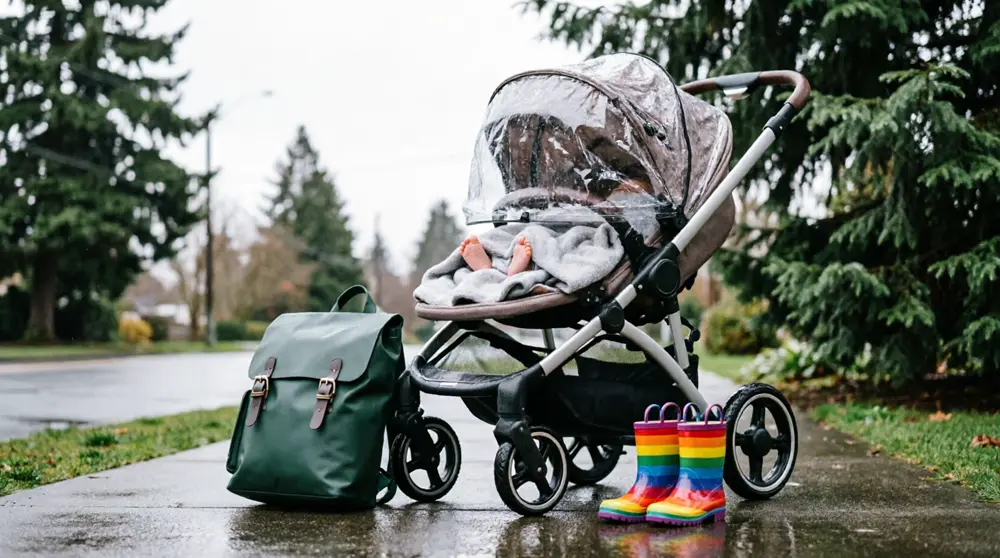
Wet fabrics ruin commutes fast. A reliable stroller for wet weather keeps your little one dry while you navigate crowded transit stops. The right setup changes how you handle daily errands and weekend outings. You need dependable coverage that blocks sideways rain without trapping stale air.
We recommend the UPPAbaby Rain Shield as a baseline investment. It snaps on quickly and clears moisture instantly. Many local parents also trust universal all-season rain covers for joggers and lightweight travel frames. For back carries or quick light rail rides, the Ergobaby carrier layering system works well. Pair your base carrier with a breathable water-repellent shell. You keep mobility intact while blocking wind chill.
✔ Pros: Quick installation, full canopy coverage, maintains stroller ventilation, easy wipe-clean surfaces.
✔ Real PNW use case: Rolling from Capitol Hill cobblestones to Pike Place Market without soaking the seat liner. Navigating Portland’s Saturday Market with dry handles and a clear visibility window for your toddler.
✔ Quick-dry & anti-mold tips: Remove the cover after every outing. Wipe interior seams with a dry cloth. Store gear open-air inside your apartment. Light airflow prevents trapped moisture from turning into mildew spots on padded fabrics.
Add a Pacific Northwest baby registry to track your must-haves before the season peaks. Focus on waterproof shells first. You can upgrade seats and organizers later as your walking routes expand.
Rainy Season Baby Gear Seattle Portland: Indoor Play Solutions
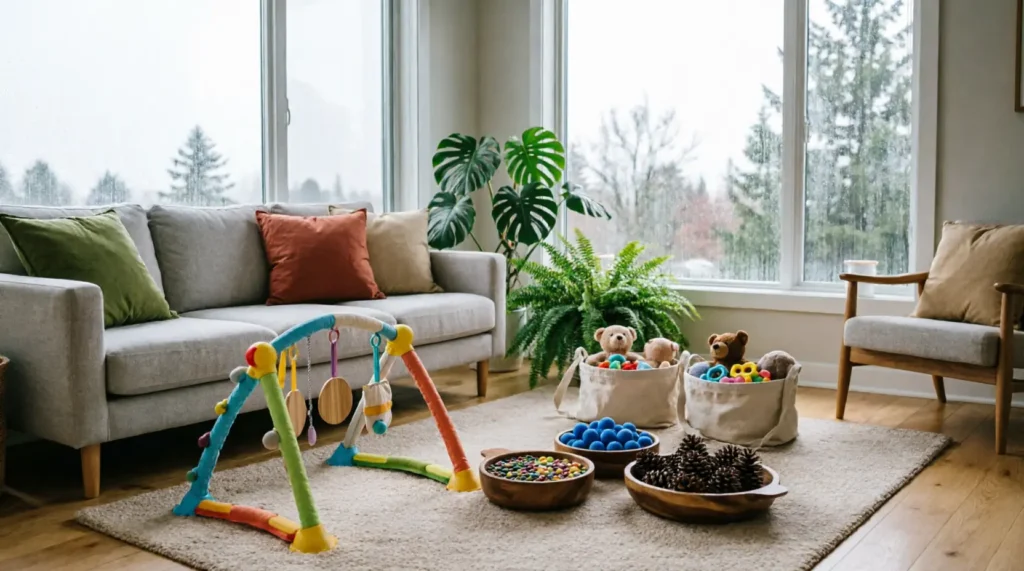
Long stretches of gray skies mean more time inside. Compact condos near downtown Seattle and cozy walk-ups in Portland rarely have sprawling playrooms. You need smart setups that maximize small square footage. Focusing on indoor baby activities Portland families love saves your sanity during back-to-back rainy weekends.
Sensory bins rank high for rainy-day engagement. Fill shallow containers with dried rice, large silicone beads, or washable water beads. Keep cleanup fast by using a vinyl splash mat underneath. Compact folding play gyms also work beautifully in tight living rooms. Look for models that roll up or store flat under a bed.
Try a simple rotation system. Pack away two-thirds of your toys for three weeks. Swap them out to refresh interest without adding clutter. This strategy keeps small spaces functional and reduces overstimulation.
Top picks for small-space play:
- Soft block building sets (washable, quiet, easy to stack on rugs)
- Activity arches with clip-on silicone teethers
- Compact indoor balance boards with non-slip rubber mats
- Magnetic drawing boards with wipe-clean screens
Store these items in labeled bins near your couch or reading nook. Quick access means less frustration when the rain refuses to stop by noon.
Air Quality & Humidity Control in Your Nursery
Pacific Northwest homes battle moisture constantly. Average indoor humidity often sits above 65% during winter months. That environment invites musty smells, damp fabrics, and irritated breathing passages. You do not need complex medical equipment. You just need smart climate control and proper ventilation.
Start with a compact dehumidifier sized for a 300–500 square foot bedroom. Pulling moisture from the room keeps crib sheets dry and mattresses breathable. Pair it with a HEPA air purifier rated for allergens and fine dust. These units cycle damp air and trap floating particles from wet outdoor shoes.
Bedding matters just as much as machinery. Choose mold resistant nursery products for everyday use. Look for tightly woven organic cotton or bamboo sheets that dry faster than heavy fleece. Add a waterproof, breathable mattress protector to block spills while allowing steady airflow. These simple swaps keep the nursery fresh and comfortable all season long.
Keep the room between 65°F and 70°F. Use a digital hygrometer to track humidity levels. Aim for 40–50% for optimal comfort. Crack a window briefly on drier afternoons to reset indoor air. Run fans on low to keep circulation steady.
Outerwear & Footwear for Little Explorers
Layering works better than single heavy suits. Start with a thin merino or cotton base layer. Add a lightweight fleece mid-layer for insulation. Finish with a breathable, waterproof shell jacket. This system adapts to temperature swings during grocery trips or neighborhood walks.
Foot choice prevents slips and soggy socks. Search for baby rain boots size 0-24 months when planning your winter wardrobe. Look for rubber uppers, soft flexible soles, and grippy tread patterns. They handle puddles on local trails and wet concrete without weighing little legs down.
Sizing tips for rapid winter growth spurts:
- Buy half a size up to accommodate thick thermal socks
- Choose adjustable hook-and-loop straps or wide elastic cuffs
- Check toe space weekly, especially between 9 and 18 months
- Measure feet at the end of the day for the most accurate fit
❌ What to skip: Avoid bulky insulated snowsuits for typical 40°F drizzle. They overheat babies quickly and make car seat buckling unsafe. Stick to thin, waterproof outer layers that move naturally with the child.
Pack a spare outfit in your car trunk. Sudden downpours happen fast near Puget Sound and the Willamette Valley. Quick swaps prevent miserable rides home.
Wet-Weather Diaper Bag Setup
A standard tote turns into a soggy mess during long café waits or transit delays. Upgrade your bag layout before your first November outing. You need dedicated waterproof compartments to separate clean items from damp ones. Wet/dry separation bags prevent spills from soaking diapers and backup wipes.
Insulated pockets matter when you sit through library story hours or wait for MAX train arrivals. They keep bottles and formula stable during temperature drops. We recommend the Skip Hop Forma Backpack. It features a roll-top dry zone, padded bottle sleeves, and easy-wipe fabric that handles rain splashes effortlessly.
Rain-Ready Diaper Bag Packing Checklist:
☐ Waterproof changing pad (roll-up style for quick deployment)
☐ Reusable wet bag for soiled outfits and cloth wipes
☐ Two insulated bottle pockets with secure snap-top lids
☐ Microfiber hand towels for quick face and shoe wipes
☐ Compact pack of diaper cream and extra wipes in sealed pouches
Weigh your bag before leaving. Heavy packs cause shoulder strain on long commutes. Keep daily items light. Store seasonal extras in a separate closet bin.
Local Parent Maintenance Habits
Gear fails when moisture sits too long. Build simple routines into your weekend schedule. Local families along the I-5 corridor share these tried-and-true habits to protect their investments and avoid mold damage.
Keep a “rain kit” in your trunk at all times. Pack two large microfiber towels, a spare universal cover, and dashboard vent clips for fast drying on the go. You can tackle sudden downpours without heading home first.
Rotate rain covers every other outing. Hang one to air-dry completely while using the backup. This simple swap extends fabric life and prevents trapped dampness from weakening stitching over time.
Dry all gear properly to avoid mildew. Avoid sealed storage in humid months. Open interior doors, run fans, or use a gentle blow-dryer on cool settings for thick padded seams.
Wipe stroller wheels and metal joints monthly. Road salt, wet leaves, and constant dampness cause rust on folding hinges. A quick wipe with a silicone spray keeps mechanisms smooth. Check brake pads after heavy use.
Quick-Reference Comparison Table
| Product | Why It Works for PNW | Price Range / Check on Amazon | Best For |
|---|---|---|---|
| UPPAbaby Rain Shield | Universal fit, crystal-clear viewing window, easy snap-on | Check | Daily stroller commutes, weekend market trips |
| Levoit Core 300 | True HEPA filter, quiet sleep mode, compact footprint | Check | Small bedrooms, nursery air quality management |
| Robeez Soft Sole Rain Booties | Flexible rubber, deep tread, easy pull tabs | Check | Early walkers, puddle play, wet sidewalk safety |
| Skip Hop Forma Backpack | Water-resistant exterior, insulated pockets, dry zone | Check | Transit days, long café waits, travel organization |
| hOmeLabs 1,500 Sq Ft Dehumidifier | Continuous drain option, auto-shutoff, low profile | Check | Whole-room humidity control, musty prevention |
Amazon prices fluctuate daily. Click through to verify current pricing, Prime availability, and seasonal sales.
Rainy Season Baby Gear Seattle Portland: Final Prep Checklist
You do not need to buy everything at once. Focus on three core priorities to stay comfortable through the wettest months. First, seal your transit setup with proper covers and organized bag zones. Second, stabilize nursery climate with targeted humidity control and quick-dry bedding. Third, stock lightweight, weather-ready clothing that adapts to changing temperatures.
Weather-specific gear saves time, money, and daily stress. You avoid emergency store runs, ruined fabrics, and uncomfortable outings. Small upgrades compound over a full Pacific Northwest winter. Your routines become smoother. Your baby stays comfortable.
Best articles :babynestgear.com/baby-bottle-washer-and-sterilizer
What is the best stroller cover for Seattle’s wind + rain?
Look for a rigid or semi-rigid universal shield with a clear front panel and secure attachment points. Wind-resistant covers stay flatter against the canopy and prevent water from pooling inside. Always pair it with a breathable seat liner to avoid condensation buildup.
How do I stop baby gear from getting moldy in Portland humidity?
Remove gear covers after every outing. Wipe seams dry with a clean towel. Store strollers and carriers indoors with a fan running for at least two hours. Use silica gel packets in diaper bag pockets and keep nursery humidity between 40–50%.
Do babies need rain boots in the Pacific Northwest?
Yes, once they begin pulling up or walking. Soft rubber booties with flexible soles protect against cold puddles and slippery concrete. Choose lightweight options that allow natural ankle movement. Avoid heavy winter boots for typical drizzle days.
Can I use a standard diaper bag for rainy season outings?
You can, but it requires added protection. Line the main compartment with a wet/dry laundry bag. Store wipes and bottles in sealed pouches. Upgrade to a bag with a water-resistant exterior and dedicated dry zone to avoid cross-contamination and ruined supplies.