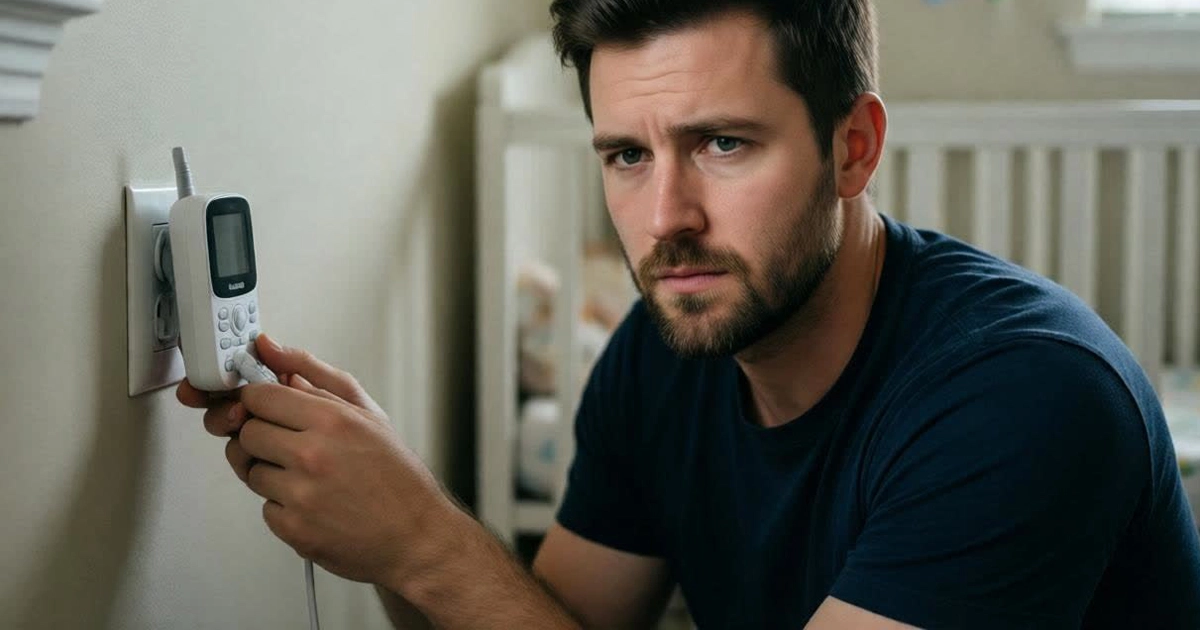
Can Hackers Talk Through Baby Monitors? Real Risks & Smart Protection Tips
Table of Contents
Can Hackers Talk Through Baby Monitors?This isn’t an isolated horror story. It represents one of the most psychologically disturbing forms of baby monitor hacking: voice intrusion through two-way audio features. As a grandmother who’s researched extensively into cybersecurity threats facing modern families, I need you to understand something crucial: yes, hackers can talk through your baby monitor—but only if it has specific features and vulnerabilities.
This comprehensive guide explains exactly how voice hacking works, which monitors allow it, the devastating psychological impact on families, and—most importantly—how to prevent it from happening to your family. For broader context on monitor security and EMF safety concerns, see our complete analysis: Are Wi-Fi Baby Monitors Safe?
How Voice Hacking Actually Works
Voice hacking through baby monitors requires three specific conditions to occur together:
The Technical Requirements
1. Two-Way Audio Capability
The monitor must have a built-in speaker and microphone that allows parents to talk back to their baby. This “talk-back” or “two-way communication” feature is marketed as a convenience—soothing your baby with your voice without entering the room.
2. Internet Connectivity
The device must connect to the internet, typically through WiFi. Local-only monitors that don’t connect to the internet cannot be accessed remotely, eliminating this vulnerability entirely.
3. Compromised Security
The hacker must gain unauthorized access through weak passwords, credential stuffing, unsecured networks, or firmware exploits—the same methods used to access video feeds.
The Attack Sequence
Once a hacker gains control of an internet-connected monitor with two-way audio, they can:
- Access the live feed to observe your baby and home
- Use the app or web interface to activate the speaker function
- Speak directly through the monitor using their own microphone
- Control camera movement (pan/tilt) for psychological impact
- Observe your reaction in real-time through continued video access
The most disturbing aspect? Often the hacker pairs voice intrusion with camera movement, demonstrating they’re actively controlling the device and watching your response. The hacker was using the night-vision lens controls to follow the parent’s movements, narrating them to the baby: “Oh look, daddy is walking into the room!”
Which Baby Monitors Allow Voice Hacking?
Not all monitors present equal risk for voice intrusion. Understanding which devices are vulnerable helps you make informed decisions.
Highest Risk: WiFi Video Monitors with Talk-Back Features
Most Wi-Fi video monitors with talk-back functionality from brands like Nanit, certain Motorola models, Foscam, Ring, and many smart camera systems used as baby monitors can potentially be exploited for voice hacking if security is compromised.
Common Features That Create Vulnerability:
- App-controlled two-way audio
- Cloud-based speaker activation
- Remote talk-back from anywhere
- Integration with smart home systems
- Voice assistant compatibility
In November 2016, a Washington couple were alarmed to discover that a stranger had hacked into their Foscam baby monitor and was spying on their toddler—sometimes screaming profanities at the baby.
Medium Risk: WiFi Monitors with Audio-Only Communication
Some monitors offer parent-to-baby audio without full two-way conversation. While these reduce interaction possibilities, they still allow hackers to broadcast messages or sounds if compromised.
Low Risk: Non-WiFi Digital Monitors with Intercom Features
Digital monitors using DECT or FHSS technology with talk-back features can theoretically be accessed—but only by someone within local radio frequency range using specialized equipment. Remote hacking from across the country is impossible without internet connectivity.
Zero Risk: Audio-Only or Video-Only Monitors
Monitors without speaker components cannot broadcast sound, eliminating voice hacking regardless of other vulnerabilities. Similarly, monitors without internet connectivity cannot be accessed remotely, even if they have speakers.
Important Clarification:
Even analog monitors can be intercepted locally—but not remotely. The critical difference: local interference requires physical proximity and specialized radio equipment, while internet-based hacking can be performed from anywhere in the world using commonly available tools.
For families prioritizing maximum security, explore our guide to the Best Non-WiFi Baby Monitor options that eliminate remote voice hacking vulnerabilities entirely.
Real Impact on Families: Beyond the Technical
The psychological trauma of voice hacking extends far beyond the initial incident. Understanding these impacts helps contextualize why prevention matters so deeply.
Immediate Psychological Trauma
For Parents:
- Overwhelming violation of privacy and trust
- Guilt about not protecting their child
- Paranoia about other devices being compromised
- Difficulty sleeping due to hypervigilance
- Loss of confidence in monitoring technology
For Children:
- Fear of their own bedroom or nursery
- Nightmares and sleep disturbances
- Anxiety about the “voice in the monitor”
- Refusal to be alone in monitored spaces
- Association of safety devices with threat
The Louisville family’s son had named the monitor “Bad Guy” months before the voice incident was discovered—suggesting the intrusion had been ongoing, with the child trying to communicate his fear in the only way he knew how.
Long-Term Trust Issues
Families who experience voice hacking often develop lasting concerns about smart home technology:
- Device Distrust: Reluctance to use any internet-connected devices in children’s spaces
- Privacy Hypervigilance: Covering cameras, unplugging devices, avoiding smart home products
- Parenting Guilt: Ongoing self-blame for the security failure
- Relationship Stress: Partners blaming each other for device choices or security oversights
Recovery Process:
Some kids develop fear of their rooms or monitors after incidents. Professional counseling may be necessary to help children process the experience and rebuild feelings of safety in their own homes.
The Broader Safety Implications
Beyond emotional trauma, voice hacking raises serious safety concerns:
- Information Gathering: Hackers learn family routines, names, schedules
- Home Layout Knowledge: Understanding of home layout and entry points
- Vulnerability Assessment: Identification of when homes are empty or occupied
- Escalation Potential: Voice access could precede physical threats or burglary
What Happened: Notable Voice Hacking Incidents
Understanding real cases helps parents recognize that this isn’t theoretical fearmongering—it’s documented reality.
The Louisville “Bad Guy” Monitor
A Louisville family thought their young son was going through a “monster phase” when he named their baby monitor “Bad Guy” shortly after purchase. They dismissed his concerns until one day when they heard a voice ask their child through the monitor: “How old are you?”
The Warning Signs They Missed:
- Child’s persistent fear of the monitor
- Unusual naming choice (“Bad Guy”)
- Monitor randomly panning across the room
- Child’s behavioral changes around bedtime
Looking back, the parents realized the intrusion had likely been ongoing for months, with their child trying to communicate his distress in ways adults initially misinterpreted.
The Washington Profanity Incident
In November 2016, a couple discovered a stranger had been spying on their toddler and sometimes screaming profanities at the baby. The hacker used night-vision controls to follow parents’ movements and narrated their actions to the child.
The psychological impact was devastating—knowing that a predator had not only watched their most intimate family moments but had actively tormented their vulnerable child.
The Seattle “I Love You” Intrusion
A Seattle couple’s 3-year-old daughter called out to her mother: “Mommy, mommy. The voice is talking to me.” When Jo went upstairs to investigate, her daughter said, “The man said, ‘Jaden, I love you.'”
The Fredi video baby monitor had been remotely accessed. The parents noticed the camera had changed its focus from their baby’s crib to the room itself without their input. The Electronic Frontier Foundation had previously warned that these baby cameras are regularly and routinely hacked.
This incident demonstrates how hackers sometimes use seemingly benign phrases to create confusion—”I love you” sounds innocent out of context but represents a terrifying invasion when spoken by a stranger to your child.
The Florida “Kills” Warning
Candace Manker of Crescent City, Florida heard noises and different voices through her baby monitor that she initially dismissed. That changed when she heard a banging noise followed by a woman’s voice speaking the words: “Kills kill kill kill.”
Most disturbing? When she checked her router, there was an IP address connection she didn’t recognize—despite never intentionally connecting her monitor to WiFi. This raises the terrifying possibility that some monitors may have hidden connectivity features parents don’t know about.
Immediate Actions If Voice Hacking Happens
If you hear an unfamiliar voice through your baby monitor, act immediately and decisively:
Step 1: Unplug the Monitor Immediately
Disconnect power and, if applicable, disable WiFi connectivity. Do not wait to investigate—cutting power instantly terminates the hacker’s access and protects your child from further psychological harm.
Action Priority:
- Remove your child from the monitored room
- Physically unplug the device
- Comfort and reassure your child
- Document what occurred (write down exact words, time, circumstances)
Step 2: Factory Reset the Device
Once unplugged, perform a complete factory reset following the manufacturer’s instructions. This wipes any unauthorized access or modified settings the hacker may have implemented.
Reset Locations: Most monitors have a reset button on the back or bottom of the device. Some require holding the button for 10-30 seconds while powering on.
Step 3: Change All Related Passwords
Remember to change potentially compromised passwords, especially those on your baby monitor’s app. Choose a strong, complex password—never reuse it for different accounts.
Critical Password Changes:
- Baby monitor app/account
- WiFi network password
- Router admin password
- Email account associated with monitor
- Any other accounts using the same password
Make sure you select the option that logs you out of the account on all devices (including the potential hacker’s). You can then log back in using the new password.
Step 4: Secure Your Network
It’s also a good idea to change your network’s password. By changing your WiFi password, you’ll cut off any unauthorized access.
Network Security Steps:
- Log into router admin panel
- Change admin credentials if still default
- Enable WPA3 encryption (or WPA2 minimum)
- Disable WPS and UPnP
- Create separate guest network for IoT devices
- Check for unknown connected devices
Step 5: Contact Manufacturer and Authorities
You should also let the manufacturer’s customer support know about the incident so they can investigate. Informing them may help address security vulnerabilities to prevent similar incidents in the future.
Report the Incident:
- Contact local police for documentation
- File report with FBI’s Internet Crime Complaint Center (IC3) at ic3.gov
- Notify manufacturer’s security team
- Consider sharing experience (anonymously if preferred) to warn other parents
Step 6: Consider Replacing with Non-WiFi Model
If your baby monitor’s been hacked, seriously consider investing in a different device with advanced security features—or better yet, one that doesn’t connect to the internet at all.
Many families who experience voice hacking never trust internet-connected monitors again. Non-WiFi alternatives like Infant Optics, Eufy SpaceView, or Bebcare provide excellent monitoring without internet vulnerabilities.
For comprehensive comparisons, see our detailed review: Best Baby Monitor No WiFi (Safe & Reliable Picks for 2026)
For detailed guidance on identifying potential compromises, read our article: Signs Your Baby Monitor Has Been Hacked
Prevention Is Simpler Than You Think
While voice hacking sounds terrifying, preventing it is straightforward when you understand the vulnerability chain.
Option 1: Eliminate the Capability Entirely
Choose Monitors Without Two-Way Audio:
If you don’t need talk-back functionality, simply don’t buy monitors with speakers. Video-only or audio-only (parent hearing baby, not vice versa) monitors cannot broadcast voice even if hacked.
Use Non-WiFi Alternatives:
Non-WiFi digital monitors using DECT or FHSS technology operate on closed systems. Without internet connectivity, remote voice hacking becomes impossible.
Models like the Infant Optics DXR-8 PRO, Eufy SpaceView Pro, and Bebcare provide excellent video quality with complete immunity to remote voice intrusion.
Option 2: Secure WiFi Monitors Properly
If you need remote access and talk-back features, implement these security layers:
Essential Security Measures:
- Never use default passwords—change immediately to strong, unique credentials
- Enable two-factor authentication wherever supported
- Update firmware regularly—set monthly reminders
- Disable remote talk unless actively using it—turn off when home
- Use guest network isolation for IoT devices
- Avoid cloud-based speaker control when possible
Avoid These Vulnerable Monitors:
Avoid monitors with cloud-based speaker control where the talk-back feature requires internet routing through manufacturer servers rather than direct local network communication.
Research security track records before purchasing. Brands with histories of unpatched vulnerabilities or delayed security responses present higher risk.
Option 3: Disable Two-Way Audio Features
Many monitors allow disabling the talk-back speaker while maintaining video functionality. Check your monitor’s settings to:
- Disable microphone/speaker in app settings
- Turn off remote talk-back features
- Restrict speaker use to local network only
- Mute or physically disconnect speaker if possible
This compromise maintains video monitoring convenience while eliminating voice intrusion risk.
The Psychology of Voice Hacking: Why Attackers Do This
Understanding hacker motivations helps contextualize the threat:
Predatory Voyeurism: Some attackers specifically target children, with voice interaction amplifying their sense of power and control over vulnerable victims.
Psychological Torture: The ability to speak directly to families and observe their terrified reactions provides sadistic satisfaction to certain predators.
Demonstration of Control: Voice intrusion proves the hacker’s complete dominance over your security, often preceding demands for money or other exploitation.
“Pranking” and Harassment: Disturbingly, some attackers view terrorizing families as entertainment, sharing videos of their intrusions in hacking communities for notoriety.
The common thread? These attackers exploit the unique vulnerability of families with young children, maximizing psychological impact while minimizing personal risk through anonymous internet access.
Conclusion: Voice Hacking Is Rare—But Preventable
Can hackers talk through baby monitors? Yes—if the monitor has two-way audio, connects to the internet, and has compromised security.
However, this specific attack remains relatively uncommon compared to simple video surveillance or network infiltration. The technical requirements limit which monitors are vulnerable, and proper security dramatically reduces risk.
The Key Takeaway:
Don’t let convenience override safety. The talk-back feature might seem helpful, but for most families, the security risk outweighs the marginal convenience benefit.
Your Prevention Options:
- Best: Choose non-WiFi monitors that cannot be accessed remotely
- Good: WiFi monitors with talk-back disabled and strong security
- Acceptable: Fully secured WiFi monitors with 2FA, updated firmware, and vigilant maintenance
The peace of mind knowing no stranger can speak to your child through their monitor? That’s priceless.
For families ready to eliminate voice hacking vulnerability entirely, explore our comprehensive guide to the best non-WiFi baby monitor options that provide excellent surveillance without internet-based threats.
Your baby deserves to feel safe in their own room. Choose monitoring technology that protects rather than endangers that fundamental security.
Frequently Asked Questions
Is it possible for hackers to talk through a hacked baby monitor?
Yes—if the monitor has two-way audio capability (speaker and microphone) and is internet-connected. Hackers who gain unauthorized access can use the app or web interface to activate the speaker and talk directly through the device. Monitors without speakers or internet connectivity cannot be exploited for voice intrusion.
How common is baby monitor voice hacking?
While exact statistics aren’t publicly available, documented incidents suggest voice hacking is relatively rare compared to simple video surveillance breaches. However, the psychological impact is so severe that even low probability warrants serious prevention efforts. As more families adopt WiFi monitors with two-way audio, the attack surface continues growing.
What should parents do immediately if they hear an unfamiliar voice through their monitor?
Unplug the monitor immediately to terminate the hacker’s access, remove your child from the room and comfort them, factory reset the device, change all related passwords (monitor account, WiFi, router, email), secure your home network, and report the incident to local police and FBI’s IC3. Consider replacing with a non-WiFi monitor for guaranteed security.
Should I stop using monitors with two-way audio entirely?
That depends on your priorities and security commitment. If you’re willing to maintain strict security practices (strong unique passwords, 2FA, regular updates, network isolation), secured WiFi monitors can be used safely. However, if you want absolute peace of mind without ongoing security maintenance, non-WiFi monitors eliminate voice hacking vulnerability entirely.
How can I tell if someone has been talking to my child through the monitor?
Yes—if the monitor has two-way audio capability (speaker and microphone) and is internet-connected. Hackers who gain unauthorized access can use the app or web interface to activate the speaker and talk directly through the device. Monitors without speakers or internet connectivity cannot be exploited for voice intrusion.
About the Author
Gran Aggie is a grandmother, parenting blogger, and child safety advocate who combines decades of family experience with intensive research into cybersecurity threats targeting children. Originally from Scotland, married to an Australian, and now living in Chicago, she has followed documented baby monitor hacking cases, interviewed affected families, and consulted with child psychologists about the trauma these intrusions cause. Her mission is ensuring every parent understands the specific vulnerability of two-way audio features and knows how to protect their children from voice-based exploitation. Gran Aggie believes informed parents make safer technology choices—and that some conveniences simply aren’t worth the psychological risk they create for vulnerable children.