Non-Toxic Baby Bottles for Sensitive Tummies: The Ultimate 2026 Safety Guide
Table of Contents
Finding the perfect non-toxic baby bottles for sensitive tummies is one of the most important decisions you’ll make as a new parent. Between managing gas, colic, and reflux while avoiding harmful chemicals like BPA, microplastics, and hidden lead contamination, choosing safe bottles can feel overwhelming. As a grandmother who’s navigated feeding challenges across two generations, I understand the anxiety that comes with wanting the absolute best for your baby’s delicate digestive system and developing body.
Recent shocking research reveals that infants may consume over 1.5 million microplastic particles daily from heated plastic bottles, and 91% of glass baby bottles with painted logos contain detectable levels of lead. These alarming findings have completely changed our understanding of bottle safety in 2026.
This comprehensive guide cuts through the marketing claims to give you science-backed recommendations for nontoxic baby bottles for sensitive stomachs that prioritize both chemical safety and digestive comfort.
Top 3 Picks: Best Non-Toxic Baby Bottles for Sensitive Tummies
🏆 Best Overall: Nanobébé Flexy Silicone Baby Bottle
Why We Love It: Winner of “The Best Silicone Baby Bottle” award by Best of The Bump 2025, combining medical-grade silicone safety with advanced triple-vent anti-colic design.
💎 Best Glass Option: Lifefactory Glass Baby Bottle
Why We Love It: Thermal shock-resistant borosilicate glass with protective silicone sleeve, completely free from microplastics and chemical leaching.
💰 Best Value: Dr. Brown’s Natural Flow Glass Bottle
Why We Love It: Clinically proven anti-colic vent system in chemical-free glass at an accessible price point, trusted by pediatricians worldwide.
Product Comparison Table
| Feature | Nanobébé Flexy Silicone | Lifefactory Glass | Dr. Brown’s Glass | Pura Kiki Stainless | BIBS Glass Complete |
|---|---|---|---|---|---|
| Price Range | $30-35 (2-pack) | $25-30 (single) | $20-25 (3-pack) | $35-40 (starter set) | $28-32 (single) |
| Material Safety | Medical-grade silicone, BPA/phthalate/lead-free | Borosilicate glass, silicone sleeve | Tempered glass, BPA-free | Food-grade stainless steel | Borosilicate glass, natural rubber |
| Anti-Colic Features | Triple-vent system | None (shape aids digestion) | Internal vent system | Wide-neck design | Anti-colic latex nipple |
| Age Suitability | Newborn-12 months | Newborn-12 months | Newborn-12 months | Newborn-adult (convertible) | Newborn-12 months |
| Dishwasher Safe | Yes (top rack) | Yes | Yes | Yes | Yes |
| Freezer Safe | Yes | Yes | Yes | No | Yes |
| Key Advantage | Most digestive comfort | Zero chemical exposure | Best anti-colic system | Lifetime use | European safety standards |
| Potential Drawback | Higher initial cost | Heavier weight | More parts to clean | Cannot freeze | Natural latex (allergy risk) |
Detailed Product Reviews
1. Nanobébé Flexy Silicone Baby Bottle: Best for Sensitive Tummies
The innovative Nanobébé Flexy Silicone Baby Bottle is made with naturally hygienic, food-grade silicone that’s BPA-free, phthalate-free, lead-free, and PVC-free. This bottle earned its award through genuine performance that addresses both toxicity concerns and digestive sensitivity.
Why It’s Perfect for Sensitive Stomachs:
The ultra-soft, breast-like silicone nipple makes it easier for babies to switch between breast and bottle feeding, and its advanced triple-vent design makes it easy on a baby’s tummy. This combination is crucial for babies with sensitive digestive systems who struggle with both gas and bottle acceptance.
Key Features:
- Available in 5 fun colors with optional easy-attach handles
- Larger size allows babies to practice self-feeding
- Flexible, squeezable design mimics breast compression
- Naturally hygienic medical-grade silicone
- Triple-vent system reduces air intake during feeding
Pros: ✅ Excellent for reducing gas, colic, and reflux symptoms ✅ Easy transition between breast and bottle ✅ Lightweight and unbreakable for travel ✅ No risk of microplastic exposure ✅ Simple to clean with fewer components than vented plastic bottles
Cons: ❌ Higher upfront cost than basic bottles ❌ Silicone may leach at very low and very high temperatures, so avoid extreme temperature exposure
Best For: Breastfed babies with sensitive tummies who need gentle bottle introduction combined with maximum anti-colic protection.
2. Lifefactory Glass Baby Bottle: Purest Material Option
The ergonomic design makes them easy to hold and clean, while the silicone sleeve provides a secure grip and added protection against breakage. You can also put these bottles in the freezer (with breast milk in them) because they are made of thermal shock-resistant glass.
Material Safety Excellence:
Glass represents the gold standard for baby bottles because it’s inert, meaning it releases nothing into milk at any temperature. Unlike plastic alternatives that degrade over time, glass maintains its integrity indefinitely.
Key Features:
- Thermal shock-resistant borosilicate glass
- Protective silicone sleeve in vibrant colors
- Multiple sizes (4oz, 9oz)
- Wide neck for easy cleaning
- Compatible with standard nipples
- Freezer and dishwasher safe
Pros: ✅ Zero chemical leaching at any temperature ✅ Doesn’t retain odors or stains ✅ Silicone sleeve prevents breakage ✅ Long-lasting durability ✅ Unpainted design eliminates lead concerns
Cons: ❌ Heavier than silicone or plastic alternatives ❌ Can break if dropped without protective sleeve ❌ Higher price point than basic options
Best For: Parents prioritizing absolute zero chemical exposure who primarily bottle-feed at home where weight matters less.
3. Dr. Brown’s Natural Flow Glass Bottle: Anti-Colic Champion
Dr. Brown’s Natural Flow Anti-Colic Options+ Narrow Baby Bottle is designed to tackle the root causes of colic with its unique venting system that reduces the amount of air baby swallows during feedings, which minimizes gas, burping and spit-up.
Clinically Proven Performance:
This bottle has been tested with actual infants who suffered from reflux, colic and dairy protein allergies, and it was the only bottle that reduced reflux and gas symptoms. The internal vent system represents decades of engineering focused specifically on digestive comfort.
Key Features:
- Patented internal vent system
- Clinically proven to reduce colic
- Available in glass and BPA-free plastic
- Options+ allows removal of vent for older babies
- Multiple nipple flow rates
- Dishwasher safe (top rack)
Pros: ✅ 64% of survey respondents confirmed it helps reduce gas and colic ✅ Glass version eliminates all plastic concerns ✅ Trusted by pediatricians for 25+ years ✅ Excellent for babies with severe reflux ✅ Helps preserve vitamins in breast milk
Cons: ❌ More components to clean than simpler bottles ❌ Internal vent requires bottle brush for thorough cleaning ❌ Some parents find assembly confusing initially
Best For: Babies with diagnosed colic, reflux, or severe gas who need maximum anti-colic technology in chemical-free materials.
Buy Dr. Brown’s Glass on Amazon →
4. Pura Kiki Stainless Steel: Lifetime Bottle Solution
We love Pura’s infant bottles because they are totally plastic-free, come in two sizes, are available insulated and non-insulated, and can be converted into bottles for toddlers, kids, and adults.
Grow-With-Baby Design:
The convertible system means you purchase one bottle that transforms through multiple stages, from newborn feeding to toddler sippy cup to adult water bottle, making it exceptionally economical over time.
Key Features:
- 100% plastic-free construction
- Food-grade 304 stainless steel
- Converts for ages newborn through adult
- Insulated and non-insulated options
- Medical-grade silicone nipples and spouts
- Available in 5oz and 11oz sizes
Pros: ✅ Lifetime investment replaces multiple bottles ✅ Super durable, lightweight, chemical-free, great for travel with temperature retention ✅ Lighter than glass, won’t break ✅ Natural anti-bacterial properties of stainless steel
Cons: ❌ Cannot see milk level without opening ❌ Not freezer-safe ❌ Higher upfront cost (justified by longevity) ❌ Wide neck may not fit all formula containers
Best For: Families seeking one lifetime bottle solution and parents who travel frequently with babies.
5. BIBS Glass Bottle Complete Set: European Safety Standards
Made from high-quality, durable borosilicate glass, this bottle is temperature and thermal shock-resistant, ensuring no microplastics make their way into your baby’s milk. The set comes with a round, natural rubber latex nipple that provides a familiar and comforting experience.
Scandinavian Design Excellence:
Designed and manufactured in Denmark, the BIBS bottles meet strict European safety standards that often exceed US requirements, particularly for chemical testing.
Key Features:
- Borosilicate thermal-resistant glass
- Natural rubber latex anti-colic nipple
- 100% food-grade materials
- Promotes smooth milk flow
- Reduces air swallowed during feeding
- Complete starter set available
Pros: ✅ Exceeds both European and US safety standards ✅ Natural rubber nipple feels most like breast ✅ Anti-colic design reduces discomfort ✅ Beautiful Scandinavian aesthetic ✅ Comprehensive starter sets save money
Cons: ❌ Natural latex may cause allergies in sensitive babies ❌ Fewer retailers stock BIBS in US ❌ Limited nipple flow options compared to competitors
Best For: Parents seeking European design and safety standards with natural rubber nipples for most breast-like feeding experience.
6. Philips Avent Natural Glass Bottle: Breastfeeding Transition
With their unique nipple design, your baby can control the milk flow, mimicking natural breastfeeding. These BPA-free bottles have a soft, wide, breast-shaped nipple for easy latching and comfort. The no-drip design prevents spills, while the anti-colic valve helps reduce discomfort by venting air away from your little one’s tummy.
Key Features:
- Natural Response nipple releases milk only when baby drinks
- Anti-colic valve system
- Wide breast-shaped nipple
- BPA-free borosilicate glass
- Rated 4.8 stars by over 20,000 parents
- Dishwasher safe
Pros: ✅ Natural Response Nipples mimic the breastfeeding rhythm, promoting comfort ✅ Easy to clean wide-mouth design ✅ Compatible with entire Avent system ✅ Excellent for combination feeding
Cons: ❌ Default nipple flow may not suit every baby ❌ Some find aesthetics less appealing ❌ Glass version more expensive than plastic
Best For: Breastfeeding parents seeking seamless bottle introduction with proven anti-colic technology.
Buy Philips Avent Glass on Amazon →
Purchase Considerations: What Matters Most for Sensitive Tummies
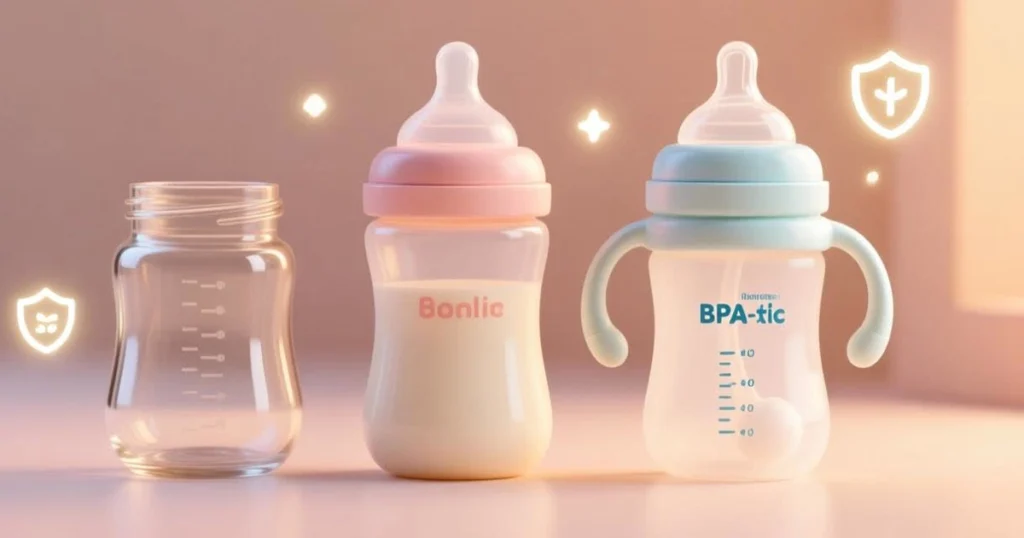
Material Safety Hierarchy (2025 Science-Backed)
Tier 1: Unpainted Glass (Safest) Glass is inert, meaning it releases nothing into milk at any temperature. The only risk is exterior lead paint, making unpainted, clear glass the safest choice.
Tier 2: Food-Grade Stainless Steel Extremely durable, non-leaching, and unbreakable. An excellent and practical choice for safety and longevity.
Tier 3: Medical-Grade Silicone The best flexible alternative. It’s far safer than plastic and doesn’t break down into microplastics. Ensure it’s 100% medical-grade, as lower-quality silicone can contain fillers.
Avoid: All Plastics When you heat a plastic bottle to the standard 70°C (158°F) to prepare formula, the plastic matrix degrades and releases microscopic particles. BPA-free doesn’t mean safe—manufacturers replaced BPA with structurally similar chemicals like BPS and BPF that have hormonal potency in the same order of magnitude and similar action compared to BPA.
Anti-Colic Features for Sensitive Stomachs
A bottle labeled as anti-colic is designed to reduce air swallowed during feeds, lessen gas bubbles in the stomach, and slow down food intake. Key technologies include:
Internal Vent Systems: Direct air away from milk and into the bottle base, preventing vacuum formation that causes nipple collapse.
Valve Technology: Unique valves flex as baby feeds to prevent vacuum build up, and vent air towards the back of the bottle, keeping air in the bottle and away from baby’s tummy.
Wide-Base Nipples: Can mimic the breast and help babies transition between breastfeeding and bottle feeding more easily.
Angled Design: Allows more upright feeding position, reducing reflux symptoms.
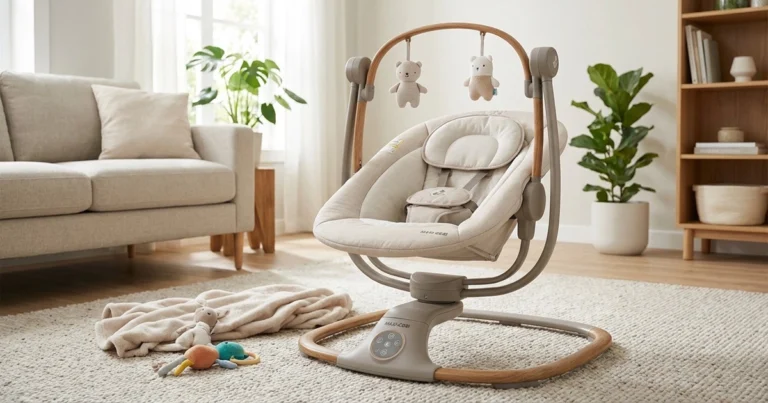
“soothing baby swings that help calm colicky infants”
Nipple Selection for Digestive Comfort
Flow Rate Matters: Start with slow flow (0-3 months), then move to medium (3-6 months) and fast flow (6+ months) as your baby’s sucking strength improves. Too-fast flow overwhelms babies, causing gulping and excess air intake. Too-slow flow frustrates babies, leading to aggressive sucking that also introduces air.
Material Options:
- Natural Rubber: Most breast-like feel but potential latex allergy
- Medical-Grade Silicone: Hypoallergenic and durable, safe choice for most babies
Cleaning and Maintenance
Rinse immediately after use to prevent milk residue buildup, hand wash with warm soapy water using a bottle brush, and for dishwasher use place on top rack only for most bottles. Never use harsh chemicals or abrasive scrubbers that could scratch surfaces where bacteria hide.
Sterilization: First-time use and periodically (weekly for young infants), sterilize through boiling, steam sterilizer, or microwave sterilization systems.
Avoiding Buyer’s Regret
Don’t Overbuy Initially: Babies have preferences you can’t predict. Purchase 2-3 bottles of your chosen type first, then expand once you confirm baby accepts them.
Consider Your Lifestyle:
- Primarily home feeding: Glass bottles work beautifully
- Frequent travel: Silicone or stainless steel prevents breakage
- Daycare requirements: Check facility policies on bottle types
- Combination feeding: Ensure compatibility with breast pump flanges
Budget Wisely: Calculate cost-per-use rather than upfront price. A $40 stainless steel bottle used for 3+ years costs less per day than $15 plastic bottles replaced every 3-6 months.
Frequently Asked Questions
Q: Are non-toxic baby bottles really necessary, or is “BPA-free” plastic sufficient?
A: Non-toxic bottles are essential. “BPA-free” doesn’t mean safe—BPA was simply replaced with equally concerning chemicals like BPS, and research found the same reproductive mutations in mice exposed to BPA alternatives. Recent studies revealed that infants could potentially consume up to 4.5 million plastic particles every single day when fed by plastic bottles.
Q: How do I know if my baby’s gas is caused by the bottle or something else?
A: If baby goes two nights in a row with colic-like symptoms, try an anti-colic bottle. However, consult your pediatrician if symptoms persist, as gas can indicate formula intolerance, reflux, or other digestive issues requiring medical attention.
Q: Will switching to anti-colic bottles cure my baby’s colic completely?
A: Truth be told, there’s no cure for colic—different things work for different babies. That said, anti-colic bottles can help ease symptoms caused by feeding issues. They address air intake but won’t resolve colic caused by formula sensitivity, overstimulation, or immature digestive systems.
Q: Can I use glass bottles at daycare?
A: Check your daycare’s specific policies. Many facilities prefer plastic due to breakage concerns, but glass bottles with protective silicone sleeves are often acceptable. Silicone bottles offer an excellent compromise—unbreakable safety with non-toxic materials.
Q: How often should I replace baby bottles?
A: Replace immediately if cracked, chipped, or showing wear. For materials:
- Glass: Lasts indefinitely with proper care
- Stainless Steel: 3-5+ years
- Silicone: 2-3 years (watch for tears or cloudiness)
- Plastic: Every 3-6 months (we don’t recommend plastic)
Q: My baby has severe reflux. Which bottle is best?
A: Dr. Brown’s bottles are specifically designed to tackle the root causes of colic with a unique venting system, and testing showed they reduced reflux and gas symptoms even in babies with dairy protein allergies. Combine with smaller, more frequent feedings and consult your pediatrician about formula options.
Q: Are expensive bottles really worth it for a sensitive stomach?
A: Quality matters significantly for sensitive babies. Premium bottles with proven anti-colic systems, medical-grade materials, and thoughtful engineering can dramatically reduce discomfort. However, price alone doesn’t guarantee performance—focus on features (venting systems, material safety, nipple design) rather than brand prestige.
Final Recommendations: Your Best Choices for 2025
After comprehensive research and analysis of current safety data, here are our definitive recommendations for non-toxic baby bottles for sensitive tummies:
For Ultimate Safety + Digestive Comfort:
🏆 Nanobébé Flexy Silicone Baby Bottle combines award-winning anti-colic technology with certified medical-grade silicone, offering the best of both worlds for babies with sensitive stomachs and safety-conscious parents.
For Zero Chemical Exposure:
💎 Lifefactory Glass Baby Bottle provides absolute purity with unpainted borosilicate glass that won’t leach anything at any temperature, protected by a grippy silicone sleeve.
For Maximum Colic Relief:
💰 Dr. Brown’s Natural Flow Glass Bottle offers clinically proven anti-colic technology with 25+ years of pediatrician trust, now available in chemical-free glass.
Buy Dr. Brown’s Glass on Amazon →
For Long-Term Value:
🌟 Pura Kiki Stainless Steel converts from infant bottle through adult use, providing a lifetime solution that eliminates the need for multiple bottle purchases as baby grows.
Remember: The safest baby bottles are made from glass, medical-grade silicone, or stainless steel. While these chemical-free baby bottles cost more upfront than plastic, they provide peace of mind and often last longer. Choose based on your lifestyle needs, but prioritize materials that won’t leach harmful chemicals while providing the anti-colic features your sensitive baby needs.
Your baby’s comfort and safety are worth the investment in quality, non-toxic bottles. Trust your instincts, consult your pediatrician if digestive issues persist, and don’t hesitate to try different options until you find the perfect match for your little one’s unique needs.
About the Author
Gran Aggie is a grandmother, parenting blogger, and baby product safety advocate with decades of hands-on experience. Originally from Scotland, married to an Australian, and now living in Chicago with her family, she has navigated feeding challenges, product safety concerns, and baby gear decisions across two generations. After extensive personal research into microplastics, chemical exposure, and infant health, Gran Aggie provides science-backed, honest guidance to help modern parents make informed decisions about essential baby products. Her reviews combine rigorous research, consultation with pediatric experts, and real-world testing to prioritize child safety and parental peace of mind above marketing claims. Follow her blog for trusted advice on creating a non-toxic nursery and choosing the safest products for your little one.
Best articles on Health & Safety Gear